A shortened version of this article was published by RENSEP on April 13, 2026.

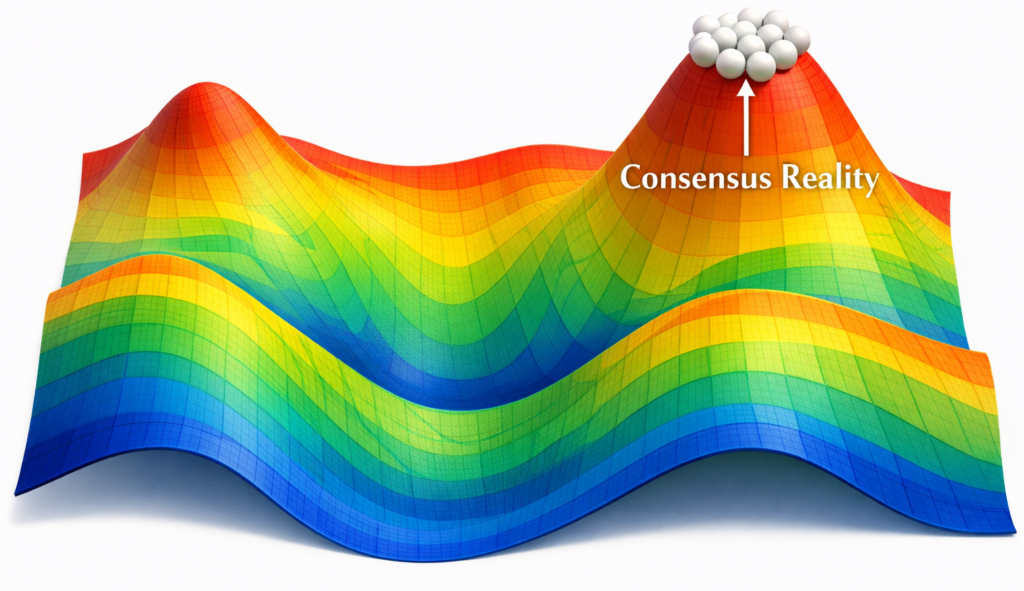
I recently joked with a friend about us being “professional dentists”; a skilled “dentist” is able to imagine a desired future and treat it as a “dent” toward which experience would roll like a marble in a valley. Accounts that align with such a skillset have been found across times and cultures, yet despite decades of research in parapsychology we do not have a satisfying mechanistic account of how such abilities function. As a consciousness researcher who until relatively recently did not know that I may have been practicing some form of magick, my intention here is to clarify what this frowned-upon term means within a naturalistic framing. Furthermore, I wish to argue for its relevance within postmaterialist science. I do not claim to provide a causally complete account of how mind-matter interactions occur, nor do I intend this as a practical manual. What we will tackle in this essay is how to get from a probability landscape where the most likely outcome looks like this:
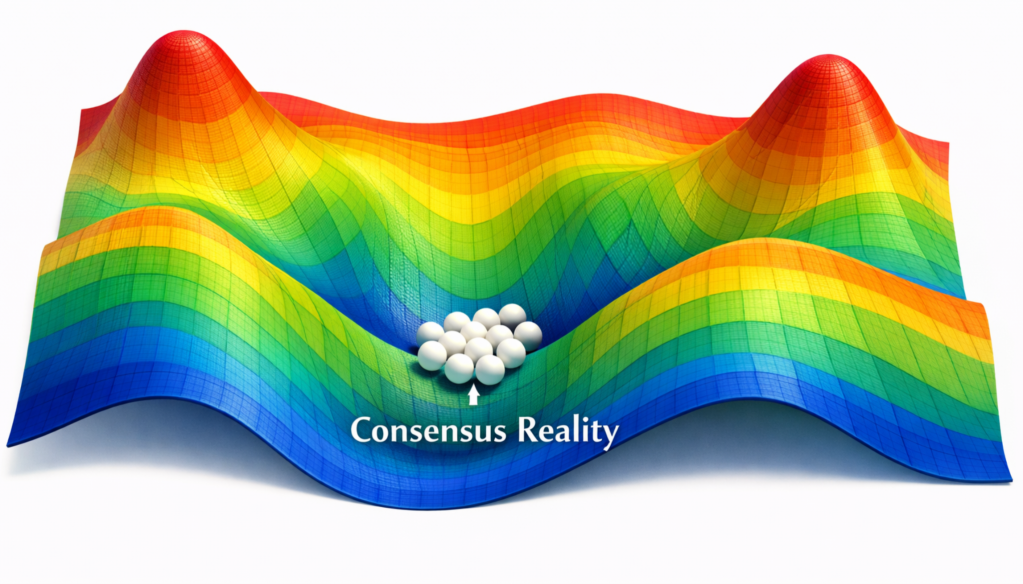
To one that looks like this instead:
The Blind Spot
Something strange happens when we begin taking seriously the possibility that our inner life and experience participate in sculpting events unfolding in the course of our lifetime. To some, the idea may feel childish and delusional, to others intuitively and anecdotally familiar, yet professionally inadmissible. It is the kind of thought that respectable researchers don’t engage with; at least not publicly.
The allegedly scientifically incoherent mechanism we will discuss here often goes under the term magick. Within the Western esoteric tradition, spelling magic with a “k” is often associated with the controversial figure of Aleister Crowley, and it functions as a boundary marker distinguishing occult or ritual practice from stage illusion. We will not be referring to perceptual tricks, but rather to our latent ability to bias the probability distribution of events that are more or less likely to be observed.
In an influential definitional move, Crowley frames magick as deliberate change-making: “Magick is the Science and Art of causing Change to occur in conformity with Will.” This framing matters because it encourages us to read magick as a structured practice of agency, in which one gradually acquires greater knowledge of how to steer a vehicle one had assumed came without a steering wheel — or at least a bad one.
This reading of “causing Change in conformity with Will” only makes sense within a particular ontological framework concerning the relation between mind (inner and private) and matter (external and public). The dominant assumption in modern science is that experience is epiphenomenal and noncausal; just some habitual gibberish echoing in our heads. With this assumption, magickal practice (denting) can’t be more than a bias: any apparent correlation between intention and outcome is a retrospective attribution rather than actual tuning into less probable branches.
The dominant assumption in the mainstream is not necessarily that mental life is completely causally inert, but rather that its causal efficacy is limited by local biological processes. In this restricted view, intention may shape behavior, but not influence events beyond the familiar sensorimotor channels of the body. This view, which by necessity dictates how experiments are designed and interpreted, is not the one held by some of the most rigorous thinkers in the history of physics and psychology. In their extended collaboration between 1932 and 1958, Nobel prize winning physicist Wolfgang Pauli and psychiatrist Carl Gustav Jung proposed something more careful: that mind and matter are not two substances in causal competition, but two complementary aspects of a single underlying reality that is itself neither purely mental nor purely physical.
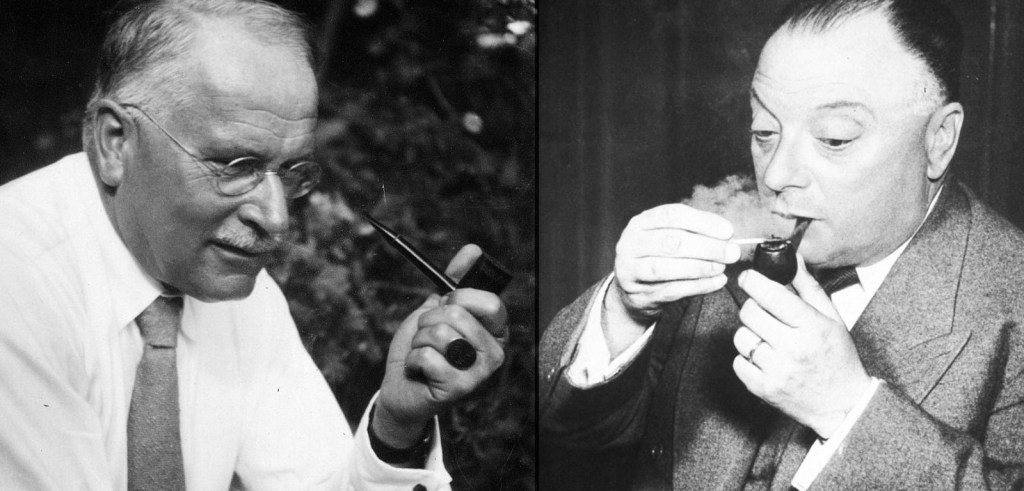
Image source: Static Polytika. Carl G. Jung and Wolfgang Pauli.
Jung further popularized this vision through the idea of the unus mundus, a primordial unified reality where the separation between mind and matter doesn’t exist. And as Pauli wrote, “it would be most satisfactory if physis and psyche could be conceived as complementary aspects of the same reality (Pauli, 1952, p. 164).” He referred to the old distinction between materialism and idealism as obsolete, arguing that a symbolic psychophysical language would ultimately be required to describe the invisible reality that quantum physics and the psychology of the unconscious offer partial evidence of. This position, for which we will advocate in this essay, is called dual-aspect monism. Before Jung’s unus mundus took on a life of its own, Spinoza spoke of a similar “unity of essence” which isn’t apprehensible in any direct way but manifests itself in its two aspects, or rather in two “epistemic splits” (Atmanspacher, 2014).
Despite the temptation to mention the impact of an incomplete ontological worldview on the ongoing global mental health crisis and our intellectual history (e.g., Sir Walter Scott’s elimination of “masses of rubbish” from the Hermetica while preparing its most influential early translation), our concern here is narrower and more practical. We will be taking the perspective of a natural philosopher and asking, if mental and material processes are not separate but complementary aspects of one underlying process, as dual-aspect monism implies, then under what conditions might attention and intention as psychophysical functions participate in shaping observations? Or how about something more pragmatic, such as improving wellbeing? And by what mechanism could such magick actually occur? Rather than appealing too quickly to “entangled minds,” this essay explores interpersonal oscillatory coupling through which organisms influence one another more deeply than our dominant worldview allows.
A Scientific Question: The Medium of Interdependence
Steven Strogatz, a mathematician at Cornell whose work on synchronization has influenced fields ranging from neuroscience to engineering, opens his book Sync with a poetic hook: “At the heart of the universe is a steady, insistent beat: the sound of cycles in sync (Strogatz, 2003, p. 1).”
Even though this might sound more as poetry than as science to some, I think we can safely rely on Strogatz who spent his career documenting how systems with no central coordinator, such as fireflies, cardiac pacemaker cells, power grids and coupled pendulums, spontaneously fall into phase with one another. Synchronization, he argues, is not an exception in nature but one of its most fundamental organizing principles.
This matters for our purposes because it reframes how we approach the question of how something so illusory as “Will” or “Desire” might influence what appears in the environment.
We are not asking whether the mind can “touch objects” across distance and change what is determined by physical laws. We are asking how a body that is already embedded in a network or ecosystem of coupled oscillators influences how other coupled bodies behave, and in particular when it changes its oscillatory signature in a relatively “loud” way.
For over a century, experimental parapsychology has been circling this question from an empirical side. In his presidential address, Dr. Everton Maraldi of the Parapsychological Association in Brazil emphasizes how several eminent thinkers, including some Nobel Prize winners, took the possibility of psychic phenomena seriously and even contributed to scientific investigations on the subject, including Charles Richet (1850–1935), Henri Bergson (1859–1941), Pierre and Marie Curie (1867–1934), the aforementioned Wolfgang Pauli (1900–1958), and many others. The Parapsychological Association, one of the most important institutions engaged in the study of psychic experiences, has been an affiliated organization of the American Association for the Advancement of Science (AAAS) since 1969, yet none of these accomplishments have significantly altered parapsychology’s status as a marginal science.
Numerous statistically non-trivial anomalies have been reported by parapsychologists, but there is still no validated mechanism of action. This absence of a mechanism and clean-cut reproducibility are why various intriguing findings have remained on the fringes of scientific acceptance. The signal is there but a clean causal story is not, and without a clean causal story even robust anomalies tend to be absorbed into the background noise of skepticism rather than attracting academic attention that they deserve.
Perhaps, we are now better positioned to supply a good story, eventually leading to a good explanation that would make someone like David Deutsch satisfied. The framework proposed here is not resonance-based in a vague metaphorical sense. We will be looking at oscillatory coupling as a mechanism in which rhythmic systems are linked in such a way that changes in one modulate the dynamics of another. Resonance is only one condition under which coupling can become especially efficient, allowing energy or information transfer to be amplified when frequencies or modes are well matched, while the medium is the channel through which interaction becomes possible. According to many scientists, oscillatory coupling is a fundamental mechanism of communication.
Coupled Harmonic Oscillators
A harmonic oscillator, broadly defined, is any system that experiences a restoring force proportional to its displacement from equilibrium, meaning when pushed away from its resting state, it tends to return to it, often resulting in rhythmic, oscillating behavior.
The human body is full of biological oscillators at many scales, from mechanical like heart muscle contractions or the eardrum vibrating in response to sound, to electrical like the rhythmic firing of neural networks visible as brainwaves on an EEG, to biochemical like the molecular feedback loops of the circadian clock ticking through a 24-hour cycle.
Coupling strength refers to the degree to which two or more oscillators influence each other’s rhythm. When oscillators are weakly coupled, they tend to drift independently, but resonance names a condition in which that interaction becomes especially efficient because the systems’ frequencies or modes are well matched. This phenomenon, known as entrainment, appears throughout nature: fireflies flashing in unison, pendulum clocks on a shared wall gradually falling into step, and, crucially for our purposes, the physiological rhythms of one person influencing those of another in close proximity. If the so-called “law of contagion” crosses anyone’s mind, it’s for the right reason.
In his book Distant Mental Influence, parapsychologist William Braud recounts how, while pondering the concept of volitional action and the will’s direct influence upon certain dynamic patterns of cerebral activity, he began to wonder whether the mind can influence not just one’s own brain, but perhaps other neural or biological systems as well. This question led him to a series of carefully controlled experiments examining whether one person’s focused intention could measurably alter the physiology of another person at a distance, producing detectable changes in skin conductance, blood pressure, and other autonomic markers. His findings, replicated across many trials, suggested that such influence is statistically robust under the right conditions.
We will be taking this one step further. Rather than focusing solely on discrete mental events or neural activity, we turn to physiological oscillations, the embodied rhythms of heartbeat, breath, brainwave, and hormonal cycle, as both the medium and the target of mental influence.
The assumption here is supported by evidence: direct mental influences between people are possible, but they are not unconditional. Braud identified several factors that modulate their likelihood and strength. Among them is the ability of the influencing agent to sustain deep concentration or absorption, effectively narrowing attention into a coherent, laser-like signal.
In the same publication, Braud also noted that such effects appear stronger when the Earth’s geomagnetic field is relatively disturbed, during so-called geomagnetically stormy periods, compared to quieter ones, suggesting that the broader electromagnetic environment modulates the coupling between biological systems in ways we do not yet fully understand. The receiving system also matters: those rigidly entrained in their own rhythm appear less susceptible to external influence.
This last point connects directly to a long-standing puzzle in parapsychology known as the sheep-goat effect. Sheep, those who believe that a given phenomenon is possible, tend to produce results that confirm it. Goats, those who disbelieve, tend to produce results that deny it, and in some cases actively suppress the effect in those around them.
This is typically framed as a matter of expectation or motivation, but if our harmonic hypothesis is on the right track, something more embodied may be at work. What belief does, on this account, is set the resting state of a person’s physiological oscillators, their baseline tone, their readiness to entrain, their openness or resistance to incoming signals.
A skeptic is not merely thinking differently; they are oscillating differently, their biological systems carrying a kind of resistive coherence that actively dampens the coupling between minds and bodies in the experimental space. Conversely, a believer may enter the same room with oscillators already primed for coupling — they are ready to interact. What looks like a psychological variable, belief, may within a dual-aspect and strongly relational ontology also be a physical one: a measurable difference in coupling strength between observer, environment, and the system under study.
Key Psychophysical Ingredients
In his most recent book The Science of Magic: How the Mind Weaves the Fabric of Reality, Dean Radin builds on Gerhard Mayer’s four key elements of successful magical practice: Motivation, Effortless Striving, Belief, and Connection. He thinks three more factors should be added: Focused Intention, Clarity, and Gnosis.
As we will see, these ingredients don’t describe supernatural physics-breaking but something closer to an affective form of directed cognition, operating in a body embedded in a responsive oscillatory environment. Some primarily shape coherence, some affect coupling strength or entrainability, and some stabilize the attractor toward which the system is being nudged.
Focused Attention
Rather than treating attention as a purely cognitive function confined within the skull, we follow the work of researchers such as Fiebelkorn and Kastner (2019) and Landau and Fries (2012) who understanding attention as a rhythmic, embodied process, one that samples reality in discrete temporal windows and whose oscillatory properties can be modulated.
We should think of attention less like a “psychological spotlight” and more like a psychophysical wave-modulating function: a process that determines which frequencies and signals from the environment are allowed through to conscious experience. Salience networks in the brain concentrate attentional resources onto representations marked as significant, and sustained attentional practice changes not only what we notice but, critically, the physiological rhythms of the body doing the noticing.
Radin describes optimal attention as laser-like, and from a physical standpoint this is not metaphorical. A laser differs from ordinary light not in its energy but in its coherence: its waves are aligned in phase, which allows them to travel farther and interact more powerfully with target systems.
Clarity of Intention
Intention is understood as directed attention with an affective signature, action aimed at a specific outcome. When intention is stable and coherent, it acts as an attractor, progressively organizing perception and behavior around a particular outcome. The more precisely a practitioner can hold the felt sense of a desired outcome, the more coherent the oscillatory pattern they generate.
This is the oscillatory translation of what Radin calls effortless striving, and what the Taoist tradition calls wu-wei, or action without friction. Here coherence is not yet the same thing as coupling strength. It is better understood as the internal condition that allows intention to function as a stable attractor rather than a fluctuating and self-canceling preference.
Belief
During magical practice, Radin argues, doubt is not just an unpleasant emotion but it’s operationally corrosive. Within the oscillatory framework, this claim has a physicalist validity. Belief, understood as the stable expectation that a given outcome is possible, sets the resting state of the practitioner’s physiological oscillators. A system in which competing expectations are active, part of the nervous system anticipating success and part bracing for failure, is a system generating internal interference and unfavorable outcomes.
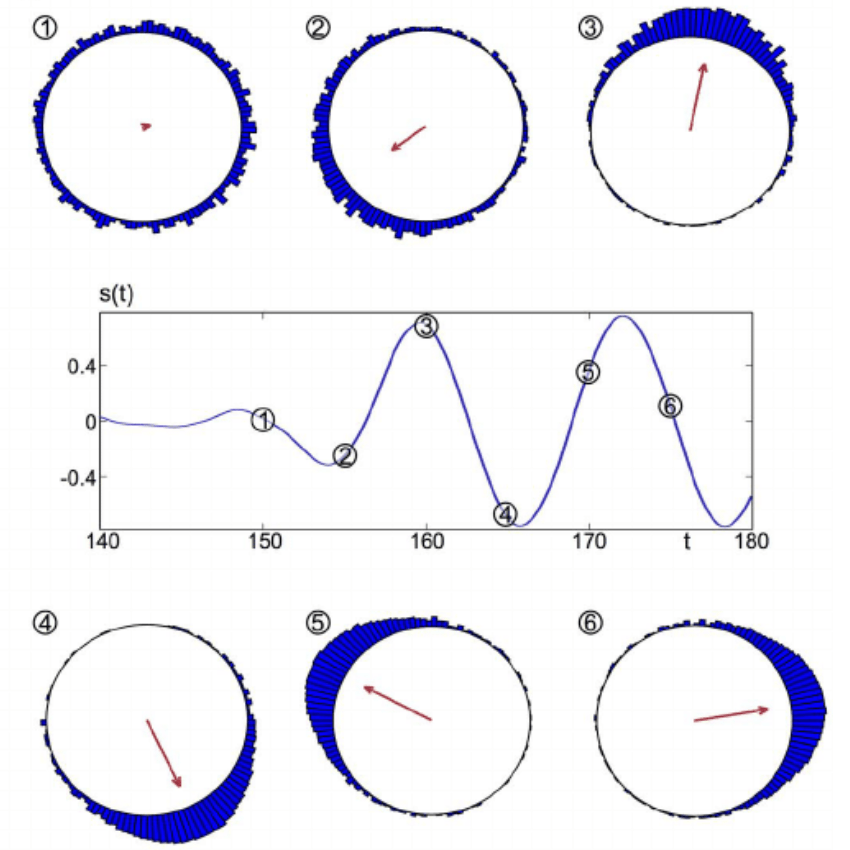
Image source: Dynamics on Network: Emergence of Hypersynchrony in Brain Networks (Schmidt et al., 2014). Oscillators coming into stronger synchrony.
Belief is why the sheep-goat effect, discussed in the previous chapter, is more than a psychological curiosity. Embodied belief is not a mental overlay but rather it is expressed as a particular pattern of autonomic tone, respiratory rhythm, neural synchrony, and other components relevant to network physiology. To believe, in this sense, is to oscillate in a particular way. More precisely, belief may strongly affect how susceptible the organism is to entering or resisting a larger pattern of coordination.
Affective Charge
A feeling is not merely a phenomenological coloring of experience. Fear, anger, loving-kindness, and equanimity each correspond to distinct patterns of affective arousal, respiratory rhythm, heart rate variability, and hormonal cascades. Feelings are not incidental to the signal the body broadcasts into its environment, when not repressed, they often are the signal.
Radin distinguishes need from desire in this context, noting that motivation without effortful striving, or in some sense without friction, is what drives a magical success. In oscillatory terms, what a need provides that ordinary desire does not is amplitude. A high-stakes affective state, one involving genuine care about an outcome rather than casual preference, produces a stronger physiological signal. Whether that stronger signal becomes more effective depends on whether it is also coherent, since high amplitude without internal order may simply generate turbulence. High-amplitude, coherent affective states, as opposed to insecure or performative ones, are precisely what sustained contemplative training such as meditation cultivates. The body learns to generate them reliably, and a body that can do that is a body whose coherent signal makes for a better metronome.
Gnosis
Greek word gnōsis, referring to “knowledge,” is derived from proto-Indo-European *gno- (“to know”) and in its English translation we face a semantic problem. The English language lacks the ability to differentiate between propositional (declarative) knowledge (German wissen) and knowledge by immediate acquaintance (German kennen), which is the kind of knowledge that, according to Hermetic sages, “brings humanity closer in touch with how things really are,” as elaborated in Hanegraaff’s Hermetic Spirituality and the Historical Imagination. In magickal practice, gnosis is often equated with the ability to hold one-pointed concentration without distraction.
As a suggestion, gnosis may be understood as the reduction of internal fragmentation that makes such one-pointedness possible in the first place. In that sense, it is less a matter of raw attentional force than of a unified psychophysical state in which competing signals have fallen quiet.
Connection
Without a mechanistic explanation, Radin describes connection as maintaining a compassionate attitude and “increasing harmony with a desired outcome.”
In our framework, mathematically speaking, this points most directly to coupling strength, a parameter that quantifies the intensity of interaction, energy exchange, or interdependence between two or more systems, components, or modules. It determines the extent to which a change in one system can modulate the dynamics of another, spanning from weak perturbation to strong and stable interaction.
In the context of oscillatory phenomenological signatures, we may think of connection not as vague sympathy but as the establishment or strengthening of oscillatory coupling between the practitioner’s internal state and the system, person, or future trajectory they are attempting to influence. Resonance may intensify this process under favorable conditions.
Given that connection can exist in both well-wishing and harmful contexts, for the sake of sanity and increasing wellbeing, it should be emphasized that compassion and well-wishing are not playing a decorative role, but are critical phenomenal “colors” that may help us apply this understanding of how we are both directors and actors within our collective experience.
Commitment
A single intentional act rarely reorganizes a complex coupled system. Entrainment takes time. The sustained return to the same directed attention over time is what produces what we might call coherence and negentropy: a progressively clearer signal in the noise of a complex environment.
This process resembles learning and habituation at the physiological level. Each return to the same intention is like a rehearsal that deepens a groove in the mind, gradually persuading the nervous system and the body’s oscillatory patterns that a particular configuration of reality is not merely desired but anticipated, expected, and treated as already partly true. In this way, commitment functions like a form of somatic persuasion: convincing the nervous system, and through it the coupled systems it touches, that a certain “memory” (whether of the past or future) is shared.
This is what my friend and I mean when we joke about being dentists. In an embodied sense, a dent becomes a memory the body holds. Remember the future, and may it be a good one for everyone.
From Internal Rhythms to Harmonic Oscillators
Here we reach the core of the argument. It would be a reductionist mistake to call the ingredients described above merely psychological variables. They can also be understood as oscillatory properties of a biological system embedded in a world of other oscillatory systems.
The phenomenon of synchrony, classically illustrated by Christiaan Huygens’s observation that pendulum clocks mounted on a shared wall can spontaneously fall into phase, is one of the most robust self-organizing principles in nature. Entrainment-like dynamics operate across scales: from cardiac cells synchronizing their firing, to fireflies flashing in unison, to forms of interpersonal physiological synchrony documented in shared emotional and ritual contexts.
Following this logic, the practitioner is not acting on the world from outside it, but rather from within. They are a node in a network of coupled oscillators, and by changing parameters such as coherence, amplitude, or stability of their own oscillatory patterns through psychophysical ingredients described above, they alter the conditions under which that network couples, entrains, and, under favorable circumstances, resonates.
Importantly, synchronization and rhythmic coupling are ubiquitous across biological systems, and they do not always require direct physical contact. What they do require is some shared medium or channel of interaction, together with sufficient coupling strength. This leaves us with the critical question of the relevant medium or channel through which such synchronization occurs when it is not explained by obvious corporeal proximity. Shared attention may be one condition that strengthens or organizes this coupling, but it is not the same as the medium, which remains an unresolved issue. If anomalous coupling occurs beyond obvious sensory or mechanical channels, then some additional pathway of interaction (e.g., via magnetoreception) remains to be characterized.
Alongside dual-aspect monism at the level of ontology, another philosophical home for this view is relational ontology. In this picture, the objects of experience are not best understood as separate material things that occasionally interact, but rather as relatively stable forms that temporarily precipitate out of ongoing interactions. In this ontology, there is nothing categorically mysterious about the idea that a coherent, directed psychophysical state could bias what crystallizes as experience.
A further formalization of this bidirectionality comes from recent work in evolutionary theory. In “Evolution by Natural Induction,” Watson, Levin, and Lewens argue that adaptation need not be produced solely by natural selection. In certain dynamical systems, especially networks whose connections are plastic under stress and subject to occasional perturbation, a system can reorganize its internal structure in a way formally analogous to associative learning, enabling the storage and recall of patterns.
Two consequences of this argument matter for our purposes. First, it provides a bidirectional picture: organisms adapt to environments, but environments can also, under certain formal conditions, acquire regularities from agentic systems, which, according to Levin, may also include Platonic forms. Second, it supports the broader claim that the world is not a static given. Some parts of the environment may be considered as plastic, history-dependent, and responsive to structured perturbations, which is where belief, ritual, and sustained intention may have outsized effects.
We may consider the following synthesis: magical practice is a patterned perturbation of a coupled system, one comprising agent, body, social niche, and material scaffolds, and patterned perturbations can produce learning-like reorganization over time.
In this view, an agent — whether they know it or not — is engaged in something closely analogous to tuning: aligning internal oscillations to increase the probability of stable coupling, and under favorable conditions, of resonant amplification.
Empirical Avenues
The research surveyed here is a small and deliberately illustrative sample. The empirical literature on mind-matter interaction and interpersonal physiological influence is substantially larger than what can be reviewed in a single essay, and the interested reader is encouraged to consult the work of the Parapsychological Association, the Institute of Noetic Sciences, and the Princeton Engineering Anomalies Research laboratory for broader orientation.
What has already been established is worth stating plainly. William Braud’s systematic experiments on distant mental influence demonstrated that one person’s focused intention can produce measurable changes in another person’s autonomic physiology, including skin conductance and blood pressure, at a distance and under controlled conditions. Stanley Krippner’s decades of work on anomalous imagery, including his dream telepathy studies at Maimonides Medical Center, documented reliable correspondences between the mental imagery of a sender and the dream content of a receiver under conditions that excluded ordinary sensory channels. The HeartMath Institute has produced a substantial body of evidence showing that coherent cardiac rhythms, generated through practices of sustained positive emotion, correlate with improved physiological regulation and, in some studies, with measurable effects on the autonomic states of people in proximity. Dean Radin’s RNG experiments, conducted over more than three decades, have shown that focused collective attention produces statistically reliable deviations from chance in physical random processes, with effect sizes small but robust across independent replications.
A particularly significant recent contribution comes from Plonka and colleagues (2026), who investigated correlations between a local network of forty Random Number Generators (RNGs) placed in a meditation room and the hundreds of RNGs distributed globally in the Global Consciousness Project 2.0, during a series of large-scale group healing meditations led by Dr. Joe Dispenza, with between one thousand and two thousand two hundred participants. During the fifteen healing meditation periods, a significant correlation was observed between the network coherence of the local and global RNG networks. This effect occurred specifically during healing meditations and not at other times.
Notably, when the local RNG network coherence was combined across all healing meditation periods, it produced a distinctive curve resembling an evoked response, the same term used in neuroscience to describe a neural signal elicited by a specific stimulus. The authors suggest that a coherently focused signal from the people in the room may evoke a measurable response from the RNGs, demonstrating that even a relatively small coherent group may have global reach.
This finding is important for our oscillatory framework because it supports two of our core claims: that focused collective attention produces measurable effects on physical randomness, and that the signal has properties, specifically the evoked-response shape, consistent with an oscillatory coupling mechanism rather than a purely stochastic anomaly.
What this literature has consistently lacked is not empirical signal but mechanistic language. The oscillatory coupling framework developed in this essay is an attempt to supply that language. I propose three avenues:
- The first and most tractable is whether sustained intention practice reliably changes attentional rhythms and autonomic markers. Building on rhythmic attention research by Fiebelkorn and Kastner (2019) and Landau and Fries (2012), and on work linking respiratory rhythms to neural excitability, this question connects directly to existing contemplative neuroscience and could be addressed with currently available methods.
- The second is whether ritualized, emotionally charged group practices increase interpersonal physiological synchrony beyond shared-stimulus baselines. If the mechanism is oscillatory coupling, then collective practices involving coordinated breath, sustained shared intention, and emotionally coherent group states should produce measurable synchrony increases in autonomic and neural metrics across participants. The Plonka et al. findings provide a methodological template and a theoretical anchor for this line of inquiry.
- The third, and most consequential, is whether increased coupling predicts downstream behavioral coordination, prosociality, and improved life trajectories. This is where magick, understood as the biasing of perceived and actualized outcomes, would be expected to manifest as a naturalistic compound effect of changed attentional habits, increased social coupling and resonance (“sangha”), and altered niche construction over longer periods of time.
The empirical agenda bears on one of the more important unresolved questions in the philosophy of mind: whether consciousness is causally inert, a byproduct of neural processes with no genuine influence on the physical world, or whether it is a participant in the causal fabric of reality.
The assumption that consciousness cannot influence matter is not a finding of neuroscience. It is a philosophical choice; and to be fair, there isn’t a consensus on how to properly define these terms. A more epistemically holistic position is that we do not yet know the causal status of consciousness, that the question is an open empirical one, and that closing it by definitional fiat has measurably slowed the progress of science in this domain.
I am not proposing an argument against materialism as a methodology but an argument against the conflation of methodological materialism with metaphysical materialism. Understanding the full scope of what magick is may be one of the necessary steps in correcting that confusion.
The Great Reenchantment: Optimal Magick and the Harmonic Self
What does a skilled magick practitioner do, and what does this framework imply for how any of us might live better?
Physician and meditator Daniel M. Ingram mapped what he calls Optimal Magick, which draws not from esoteric speculation but from Buddhist contemplative psychology, specifically the Brahma Viharas: loving-kindness (mettā), compassion (karunā), sympathetic joy (muditā), and equanimity (upekkhā). Buddhism, understood not as a religion but as a proto-science of mind developed through systematic first-person investigation over two and a half millennia, arrived at these four qualities as the foundation of both ethical life and what we might call optimal cognitive and physiological functioning. Ingram’s argument is that the quality of one’s magickal practice depends entirely on the quality of one’s mind, and that these four qualities are its essential ingredients.
Translated into the harmonic framework, this is not a metaphor but it points toward a mechanism. Loving-kindness and equanimity correspond to measurable physiological states: high heart rate variability, coherent autonomic regulation, and reduced mechanical stress in the body’s connective tissue networks. In the language of the Music Theory of Consciousness (Grobenski, 2023), they are internally coherent, low in dissonance, and therefore maximally capable of entering into resonant coupling with other systems. This convergence between Buddhist ethics and harmonic physics is not coincidental, and it is not unique to Buddhism. The same intuition recurs across traditions and millennia with a consistency that itself demands explanation.
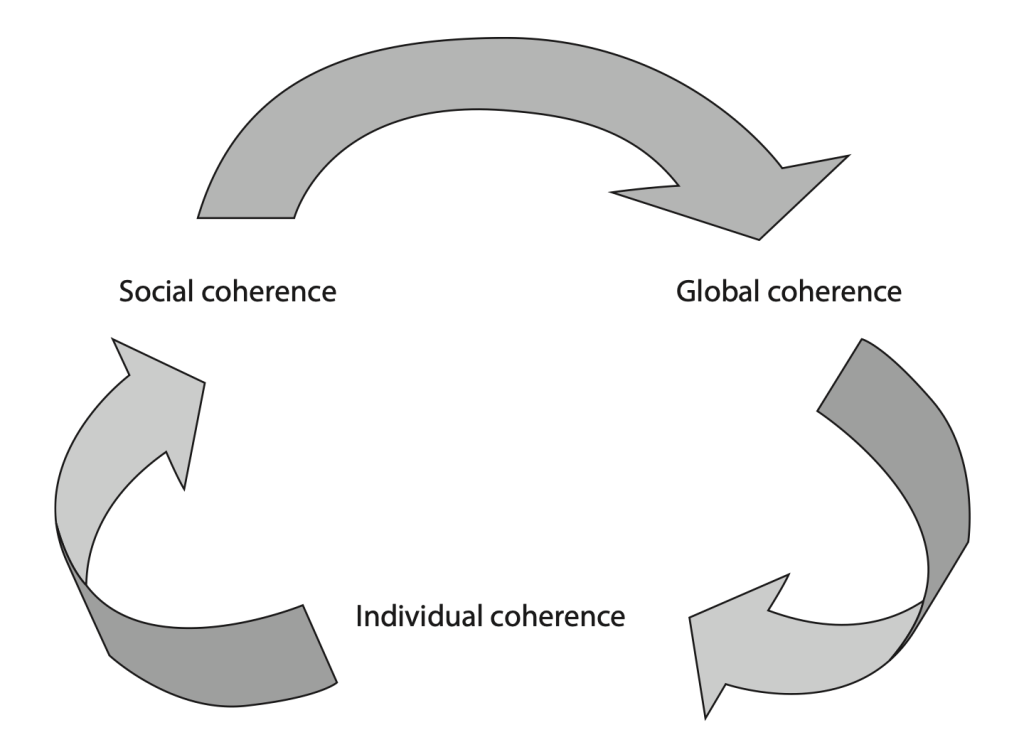
Image source: The Science of Interconnectivity (McCraty & Deyhle, 2016). HeartMath Institute’s research on human interconnectivity, including Global Coherence Initiative’s theory of change, aligns with the premise of the harmonic framework presented in this essay.
The Pythagoreans understood the cosmos as fundamentally musical, structured by ratios and harmonies that governed both celestial motion and the inner life of the soul. The Hermetic practitioners discussed earlier cultivated cardiognosis, knowledge of the heart, precisely because they understood that the quality of inner attunement determined the quality of one’s participation in the larger order of things. Indigenous traditions across continents have maintained, often against considerable external pressure, that the boundary between self and world is permeable, that inner states have outer consequences, and that harmony is not a metaphor but a description of how reality actually works. What these traditions were doing was working with a model of mind-environment coupling that the oscillatory framework allows us to explore in more depth.
Magick is what a science of consciousness may look like when stepping outside the skull. For most of its history, consciousness science has treated the brain as the most relevant unit of analysis, the place where experience happens and where its causal story begins and ends. The harmonic framework proposed here suggests a different boundary: the relevant unit is not the brain but rather the coupled system embedded in its physiological, social, and material environment, resonating with it, perturbing it, and being perturbed in return.
Regardless of whether you believe that your internal states influence outcomes in the physical world, one thing is certain: they influence the one thing that matters most to each of us — what it’s like to be You.
The perspective I outlined here is strongly influenced by the Qualia Research Institute’s work; namely, Andrés Gómez-Emilsson’s work on systems of coupled oscillators, and Michael Edward Johnson’s neural annealing framework. This essay wouldn’t be written without numerous thoughtful reflections shared by my EPRC colleague Dr. Hannah Biddell.
References
- Atmanspacher, H. (2014). Dual-aspect monism à la Pauli and Jung. Journal of Consciousness Studies, 21(1–2), 96–111.
- Braud, W. (2003). Distant Mental Influence: Its Contributions to Science, Healing, and Human Interactions. Hampton Roads Publishing.
- Fiebelkorn, I. C., & Kastner, S. (2019). A rhythmic theory of attention. Trends in Cognitive Sciences, 23(2), 87–101.
- Glass, L. (2001). Synchronization and rhythmic processes in physiology. Nature, 410, 277–284.
- Gómez-Emilsson, A. (2017). Harmonic society: 8 models of art for a scientific paradigm of aesthetic qualia. Qualia Computing.
- Grobenski, B. (2023). Why the Music Theory of Consciousness? Investigation of Qualia Formalism at the Implementation Level. Thoughts on Evolutions. Retrieved from: https://thingsiwasntsupposedtotalkabout.com/2023/11/23/why-music-theory-of-consciousness-investigation-of-qualia-formalism-at-the-implementation-level/
- Hanegraaff, W. J. (2022). Hermetic Spirituality and the Historical Imagination: Altered States of Knowledge in Late Antiquity. Cambridge University Press.
- HeartMath Institute. (2015). Science of the Heart: Exploring the Role of the Heart in Human Performance (Vol. 2). HeartMath Institute.
- Ingram, D. M. (2012). Magick and Brahma Viharas. Retrieved from: https://www.integrateddaniel.info/magick-and-the-brahma-viharas
- Johnson, M. E. (2019). Neural annealing: Toward a neural theory of everything. Open Theory.
- Krippner, S., & Ullman, M. (1970). Telepathy and dreams: A controlled experiment with electroencephalogram-electro-oculogram monitoring. Journal of Nervous and Mental Disease, 151(6), 394–403.
- Landau, A. N., & Fries, P. (2012). Attention samples stimuli rhythmically. Current Biology, 22(11), 1000–1004.
- Levin, M. (2021). Bioelectrical approaches to cancer as a problem of the scaling of the cellular self. Progress in Biophysics and Molecular Biology, 165, 102–113.
- Maraldi, E. (2025). What Does the Future Hold? The Menace of Dissolution and a View Towards Integration and Conciliation. Retrieved from: https://mindfieldbulletin.org/what-does-the-future-hold-the-menace-of-dissolution-and-a-view-towards-integration-and-conciliation/
- McCraty, R., Atkinson, M., Tomasino, D., & Bradley, R. T. (2009). The coherent heart: Heart-brain interactions, psychophysiological coherence, and the emergence of system-wide order. Integral Review, 5(2), 10–115.
- Plonka, L., et al. (2026). Correlations between onsite and global networks of random number generators during group healing meditations. [Journal details to be confirmed — exploratory study, currently in press or recently published.]
- Radin, D. (2025). The Science of Magic. [Publisher details to be confirmed.]
- Strogatz, S. H. (2003). Sync: How Order Emerges from Chaos in the Universe, Nature, and Daily Life. Hyperion.
- Varela, F. J., Thompson, E., & Rosch, E. (1991). The Embodied Mind: Cognitive Science and Human Experience. MIT Press.
- Watson, R. A., Levin, M., & Lewens, T. (2025). Evolution by natural induction. Interface Focus, 15(6).
- Whitehead, A. N. (1929). Process and Reality. Macmillan.
 Thoughts On Evolutions
Leave a comment