A forthcoming theoretical paper “The Weightless Mind and Liberation: Vasocomputation, Graviception, and the Harmonic Architecture of Consciousness” (working title) frames gravity as not just a strong prior that sculpts vascular architecture and cytoskeletal form, but also as a constraint and metronome deeply encoded in tissue tension, subtly shaping our experience of weight, cellular architecture, and subjective experience. This introductory essay focuses on gravitational annealing—whole-body recalibration of the vestibulo-vascular-tensile system.
Rooted in oscillatory dynamics model of consciousness (advocated by QRI) and the principles of vasocomputation developed independently by Michael Edward Johnson, gravitational annealing speaks of reconfiguration of the body’s tensile network (e.g., across vascular tree) that loosens chronically latched patterns of mechanical stress, allowing multiscale oscillators (vascular, neural, autonomic) to retune into higher‑coherence states.
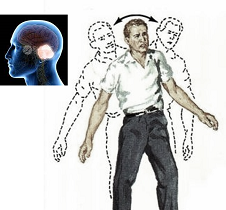
As an example, a friend was discussing tonight how she often feels bound to the ground on mushrooms, but physically active on LSD. It depends on the context. Besides the classical neurophysiological story, psychedelic ataxia may be the felt shadow of a vascular-tensile reboot: 5-HT2A-driven latch-bridge cycling, vasomotion noise and cytoskeletal softening momentarily tell the body it is in low gravity. Once the system re-anneals, both posture and oscillatory dynamics can stabilise at a more efficient, less-demanding minimum-tension point—capturing the healing overlap between floating tanks, deep meditation or cessation states, as well as transformative psychedelic experiences, all deeply rooted in our relationship with gravity: feeling high, low, deeply grounded, “lost”, etc.
A gentle introduction
Gravity is usually described as the silent force that keeps our feet on the ground, but more importantly for consciousness research, it is constantly shaping the tension of our blood vessels, the calibration of our inner-ear balance sensors, and the stance our muscles take against the pull of the planet. When people float in a sensory-deprivation tank, stretch until they “melt away” tension, or undergo the sweeping bodily releases, such as in certain therapeutic approaches (Cayoun’s Mindfulness-based Interoceptive Exposure Task), they report a common subjective thread: the feeling that the body has let go of weight. To offer an explanatory model focusing on “the phenomenology of weight”, gravitational annealing is a wellbeing framework building upon neural annealing (Johnson 2019, Gómez-Emilsson 2021), and it treats those episodes not as metaphors but as genuine, measurable reorganisations of a vestibulo-vascular-tensile network that spans the entire organism. While vasocomputation explains the cognitive shift, the physical mirror to space-like microgravity hinges on cytoskeletal muscle changes.
Rationale
Classic psychedelics such as LSD and psilocybin are potent agonists at 5-HT₂A and 5-HT₁A receptors that are expressed not only on cortical pyramidal neurons but also on vascular smooth-muscle cells (VSMCs). Activation of those receptors retunes the “latch-bridge” mechanism that normally locks vascular tone in place, generating bouts of vasodilation and low-frequency vasomotion throughout the arterial tree (López-Giménez, 2019). Because the vestibular nuclei in the brain-stem receive converging input from both the semicircular canals and baroreceptor-driven sympathetic pathways, sudden changes in vascular tone feed directly into the sense of orientation and arousal, producing the dizzy lightness and urge to lie down that so often mark the onset of a strong psychedelic experience (Ray, 2000).
Microgravity research supplies a natural experiment that makes this hypothesis plausible. In 1971, two years before founding IONS, Dr. Edgar Mitchell returned from the Apollo 14 mission. The story goes that instead of returning home with moon rocks, he returned with a message of unity:
“The experience in space was so powerful that when I got back to Earth I started digging into various literature to try to understand what had happened. I found nothing in science literature but eventually discovered it in the Sanskrit of ancient India. The descriptions of samadhi, Savikalpa samadhi, were exactly what I felt: it is described as seeing things in their separateness, but experiencing them viscerally as a unity, as oneness, accompanied by ecstasy.”
What our upcoming research paper aims to explore is whether emergent phenomenology (Sandilands & Ingram, 2024) reported by Mitchell and other astronauts may be mediated by changes in muscular tension more than cognitive processes, suggesting a potential physiological basis for profound experiences, including mystical and transcendental spiritual states. It is known that when astronauts spend weeks in orbit, VSMCs remodel their cytoskeleton and down-regulate stabilising proteins such as α-B-crystallin; similar changes occur in cultured VSMCs exposed to simulated microgravity on Earth (Ludka 2024). The same molecular fingerprint suggests that a chemically-induced wave of latch release can momentarily tell the body it is in low gravity, generating the blissful sense of weightlessness.
Besides this recent example, throughout history, numerous traditions have reported phenomena indicating altered perception and experience of gravity. From Tibetan Buddhist lung-gom-pa practitioners running with extraordinary speed and lightness and Hindu yogic traditions describing laghima siddhi (where the practitioner gains the ability to become weightless or significantly reduce their weight), to accounts of levitation in Christian mysticism, Buddhism, psychedelic trips or “falling” in love, all of these examples raise intriguing questions suggesting that under specific conditions, the mind can influence the way in which the body “reads” gravitational signals. Ever tried running on acid?
Could gravitational annealing be the mechanistic story telling us exactly where these gravitatational “metaphors” come from? Here’s a hypothesis: although an individual in a cessation state still exists in Earth’s gravitational field, the subjective experience of gravity is effectively absent, which could be traced through changes in cytoskeletal alpha-B crystallin.
What about everyday-life?
Development
A gravitational-annealing episode begins when a strong perturbation—psychedelic action, good stretching, yoga, flotation, or external loading with a therapeutic weighted vest—injects noise into the gravity-sensing loop. In the psychedelic case, 5-HT₂A stimulation oscillates vessel calibre; baroreceptors detect an erratic pressure landscape and relay it further. The vestibulo-sympathetic reflex, which normally fine-tunes muscle tone to keep us upright, now receives contradictory data and can no longer anchor posture confidently. Next thing you know, you’re lying down on the floor like a seal, effectively reducing gravitational degrees of freedom while the system searches for a new equilibrium— proprioceptive maps shrink to two-dimensional contact with the ground, a simplification that quiets noisy vestibulo-sympathetic loops and gives the nervous system room to re-synchronise its internal rhythms.
With this physiological side of the story, we are ready to tackle annealing empirically. During the ensuing minutes to hours, latch bridges re-settle and α-B-crystallin helps rebuild a cytoskeleton that is subtly less rigid than before. Whether the initial perturbation was chemical, mechanical, or sensory, the outcome is the same—less baseline muscle tension, lower blood pressure, reduced anxiety and the feeling of “having released a burden.” Clinical floatation-REST experiments and occupational-therapy trials with weighted vests both report lasting drops in state anxiety, lending empirical support to the claim that rerouting the body’s gravity map can recalibrate mood. This is just scratching the surface, but I hope it’s giving you a good idea of what we’re aiming for.
This physiological story carries an extraordinarily potent philosophical corollary. If gravity is a kind of a metronome that synchronises oscillatory dynamics, then letting the body “forget” its “outdated” gravitational references and reboot is the most direct route to updating the priors at the implementation level of consciousness. In that sense, gravitational annealing can be seen as the somatic complement to neural annealing. We recognize tremendous potential for understanding psychiatric conditions from a non-neurocentric and holistic perspective.

Future directions
The therapeutic promise of gravitational annealing invites systematic investigation. By measuring alpha-B crystallin levels during cessation states, we can test whether phenomenological experiences of ‘weightlessness’ or ‘floating’ reported in deep meditative states have measurable molecular correlates similar to those observed in actual microgravity conditions. Suddenly, all the love songs about “flying” and “feeling high” will start to make sense. On the engineering side, designers might create smart compression garments offering users a gentle, drug-free pathway into the same corridor that other substances open pharmacologically.
By situating mental health within a gravity-centred physiology, gravitational annealing reframes wellbeing as a full-body negotiation with the planet’s pull and gives researchers, clinicians and everyday practitioners a cross-cultural language for interventions that, whatever their surface differences, all work by manipulating weight and tension so that new coherence can emerge. And sometimes, adding weight is required before lightness (pressure relief) re-emerges.
A call for collaborative research
Record α-B-crystallin, near-infrared limb blood flow, and sway-platform metrics across stretching, floating, weighted-vest, and psychedelic interventions. If gravitational annealing is correct, each protocol should show the same signature: a burst of vascular “gravity noise,” a dip in cytoskeletal stress proteins, and a rebound to lower tension. The payoff? A physics of well-being where “letting go” is not a metaphor but a measurable, optimisable pathway to human flourishing.
After all the neurocentric decades, it’s time to come back to the body and listen to its music.
Thank you for reading.
Yours truly,
Beata / harmonicjunkie
Special thanks to Hannah for all the hours of discussions and Mike for his initial commentary.
If you find value in this work, please consider donating to my crowdfunding campaign that will help me cover the costs of presenting at the ASSC Conference this July in Crete.
Citation: Grobenski, B. (2025). Introduction to Gravitational Annealing. Thoughts on Evolutions.
Contact: grobenskibeata@gmail.com
References
Antonutto, G., di Prampero, P.E. Cardiovascular deconditioning in microgravity: some possible countermeasures. Eur J Appl Physiol 90, 283–291 (2003). https://doi.org/10.1007/s00421-003-0884-5
Atomi, Y. (2015). Gravitational effects on human physiology. High Pressure Bioscience: Basic Concepts, Applications and Frontiers, 627-659.
Buzsáki, G., & Tingley, D. (2018). Space and Time: The Hippocampus as a Sequence Generator. Trends in cognitive sciences, 22(10), 853–869. https://doi.org/10.1016/j.tics.2018.07.006
Gómez-Emilsson, A. (2021). Healing Trauma with Neural Annealing. Qualia Research Institute. https://www.qri.org/blog/Neural-Annealing/
Grobenski, B. (2024). Gravity and Graviception During Out-of-Body Experiences (OBEs). Thoughts on Evolutions. https://thingsiwasntsupposedtotalkabout.com/2024/04/17/15-gravity-and-gravitoception-during-out-of-body-experiences-obes/
Johnson, M. E. (2019). Neural Annealing: Toward a Neural Theory of Everything. Opentheory.net. https://opentheory.net/2019/11/neural-annealing-toward-a-neural-theory-of-everything/.
Johnson, M. E. (2023). Principles of Vasocomputation: A Unification of Buddhist Phenomenology, Active Inference, and Physical Reflex (Part I). Opentheory.net. https://opentheory.net/2023/07/principles-of-vasocomputation-a-unification-of-buddhist-phenomenology-active-inference-and-physical-reflex-part-i/
Loued-Khenissi, L., Pfeiffer, C., Saxena, R., Adarsh, S., & Scaramuzza, D. (2023). Microgravity induces overconfidence in perceptual decision-making. Scientific Reports, 13(1), 9727
Loufrani, L., & Henrion, D. (2008). Role of the cytoskeleton in flow (shear stress)-induced dilation and remodeling in resistance arteries. Medical & biological engineering & computing, 46(5), 451–460. https://doi.org/10.1007/s11517-008-0306-2
 Thoughts On Evolutions
Leave a comment