Throughout history, civilizations facing catastrophic floods have turned to monumental solutions—such as the biblical ark—to preserve humanity in times of crisis. Rather than simply fleeing from rising seas and planet Earth, we should explore genetic adaptations that allow humans to thrive in an aquatic environment, creating a new paradigm of resilience that embraces the changing world around us.
As humanity faces the dual threats of climate change and rising sea levels, unprecedented challenges demand innovative solutions. At the current rate of glacial and polar ice melt, scientists predict that sea levels could rise by 1 to 2 meters by the end of this century, a change that would displace millions along coastlines. However, if global temperatures continue to rise unchecked, several meters of sea-level rise are possible in the coming centuries, with some projections estimating that significant portions of the world’s landmass could be submerged within 500 to 1,000 years. Given these timelines, genetic engineering provides a unique opportunity to begin adapting future generations for a world transformed by water, enabling humanity not only to survive but to thrive in conditions once considered unimaginable.
While traditional adaptation methods like coastal defenses and migration offer temporary relief, a solution could lie within the realm of genetic engineering. Specifically, developing the capacity for cutaneous respiration—the ability to absorb oxygen through the skin—could enable humans to survive and thrive in a water-dominated environment. Though science-fiction-like, this New Atlantis scenario is within the bounds of scientific plausibility and offers an optimistic vision for a future on our planet that embraces both nature and technology to safeguard humanity.


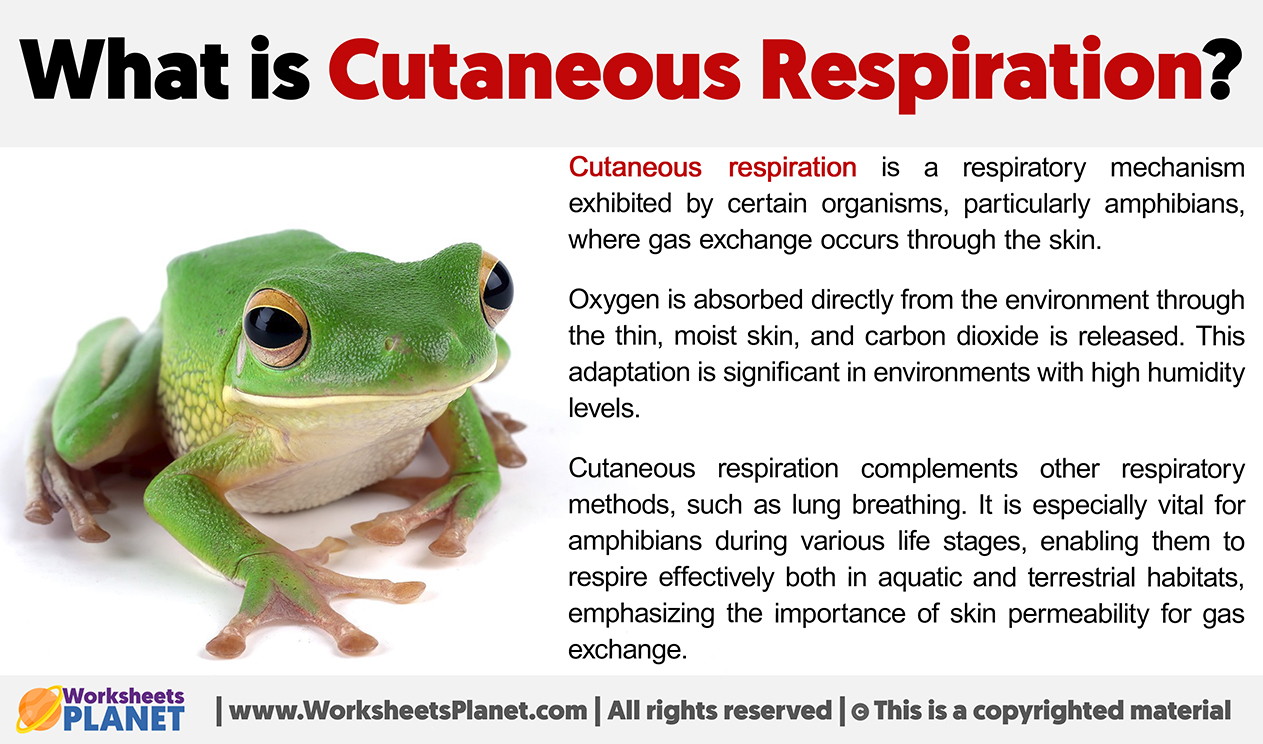
What is Cutaneous Respiration?
Cutaneous respiration, observed in amphibians like frogs and salamanders, involves gas exchange through thin, highly vascularized skin. This adaptation allows these creatures to breathe both in water and on land, providing flexibility in various environmental conditions. Humans, however, are structured differently, with thick skin that limits gas exchange. For cutaneous respiration to become viable, humans would require extensive modifications to skin structure, vascular density, and possibly even oxygen-transport mechanisms in the bloodstream. Advances in genetic engineering, including CRISPR and synthetic biology, could theoretically enable such modifications, allowing humans to develop amphibian-like skin.
Genetic Engineering: Making the Vision Possible
The genetic engineering process would involve inserting genes associated with cutaneous respiration into the human genome. Scientists could look to the genomes of amphibians or certain fish species that thrive in low-oxygen environments for genes regulating skin structure, vascularization, and oxygen diffusion. Through controlled genetic editing, these genes could be introduced into human cells, resulting in a skin structure that is thinner, more permeable, and optimized for oxygen absorption.
This genetic transformation would need to be accompanied by modifications in oxygen transport. Human red blood cells might be engineered to carry more oxygen, enabling efficient transport from the skin’s surface to vital organs. Meanwhile, an increased density of capillaries just beneath the skin would create the necessary surface area for effective gas exchange, mimicking the adaptations seen in water-dwelling amphibians.
Survival in a Flooded World: Practical Applications
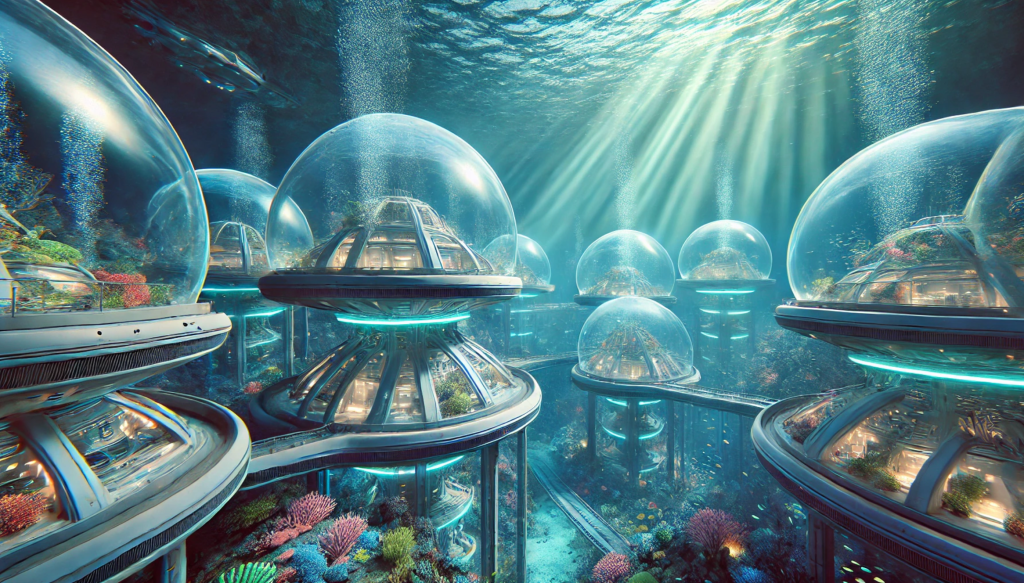
In a scenario where catastrophic floods become widespread, many coastal cities could be submerged, forcing millions into smaller, crowded areas of habitable land. Those with cutaneous respiration capabilities would obviously have an advantage in flooded environments, as they could survive in waterlogged conditions for extended periods without needing to come up for air. With amphibian-like respiration, individuals could withstand submerged or partially submerged living environments.
In this future world, settlements could be designed to float on or integrate with water, akin to aquatic habitats. Humans with cutaneous respiration would be more suited to underwater agriculture, which could include algae farming, submerged plant cultivation, and fisheries. Such a shift could help sustain large populations in areas previously deemed inhospitable, creating new economies and lifestyles that are symbiotic with aquatic ecosystems rather than battling against them.
Enhancing Resilience Against Pollutants and Low-Oxygen Environments
Beyond rising waters, climate change is also expected to bring greater pollution and fluctuating oxygen levels in both urban and natural environments. Genetic engineering for cutaneous respiration could potentially come with adaptations for enhanced resilience to pollutants, allowing skin to filter out certain toxins before they enter the bloodstream. Moreover, the amphibian-inspired genetic adaptations might include a higher tolerance for low-oxygen environments, enabling humans to survive in areas with compromised air quality or oxygen-poor waters.
This genetic resilience could extend to various environments beyond flooded regions. For instance, populations living at high altitudes, where oxygen levels are lower, might benefit from cutaneous respiration, gaining greater endurance in challenging conditions.
A Future Symbiotic: Actually Easier Than Inhabiting Mars?
As climate change continues to reshape our planet, adapting our physiology through genetic engineering might become one of humanity’s most practical tools for survival. Developing cutaneous respiration and other amphibian-inspired adaptations could not only help us withstand flooding and pollution but also open a new frontier of human evolution. In fact, it may be faster to genetically engineer these traits in humans than to make Mars inhabitable.
Adapting humans for cutaneous respiration and underwater living on Earth through genetic engineering might be feasible within a few generations—perhaps within 50 to 100 years with advancements in biotechnology. Genetic engineering to modify skin structure and oxygen absorption processes, while complex, is theoretically achievable without needing to transform an entire planet. Unlike Mars, Earth already has essential resources like a breathable atmosphere, liquid water, and established ecosystems, so genetic modifications would only need to optimize human biology for flooded environments rather than create a whole new environment from scratch.
Making Mars inhabitable would require massive, planetary-scale engineering, taking centuries if not millennia. In contrast, genetically engineering humans for amphibious adaptations to survive on Earth would require targeted biological changes, which could be implemented much faster. Given these timelines, genetic adaptation offers a more immediate solution to climate change’s challenges, potentially allowing humanity to thrive on a transformed Earth long before Mars could become a new home. Yes, you can share this post with Elon.
Essentially, by embracing cutaneous respiration and other amphibian-inspired adaptations, humans could transform existential threats like flooding and pollution into opportunities for evolution. This bold scenario presents an optimistic vision where humanity does not merely survive in a world transformed by climate but learns to live symbiotically within it.
P. S. And don’t forget about the hydrothermal vents.
 Thoughts On Evolutions
Leave a comment